The Ma’at Institute, in collaboration with the School of Applied Human Sciences, recently hosted a public lecture entitled: Weaving Afrocentricity into Community Engagement and Educational Transformation – highlighting African interests, knowledge systems, experiences, and culture in psychosocial services.
The Ma’at Institute, formerly known as the Africology Unit, was established within the School of Applied Human Sciences within the College of Humanities to respond specifically to providing multidisciplinary human and social interventions that are embedded in the African world view, philosophy, values and belief systems.
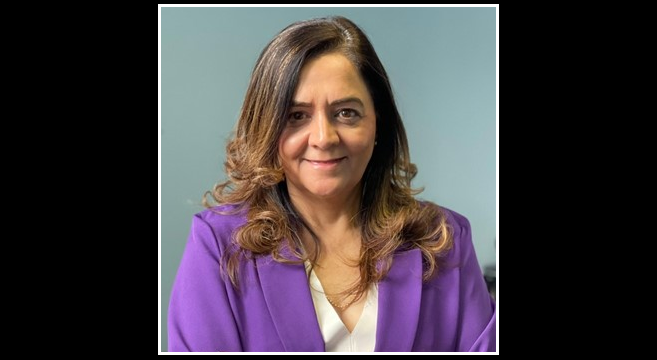
This knowledge-exchange event noted the importance of “reclaiming narratives”, featuring two guest speakers, Professors Deanna Cooke and Cheryl Grills of Loyola Marymount University, Los Angeles, USA.
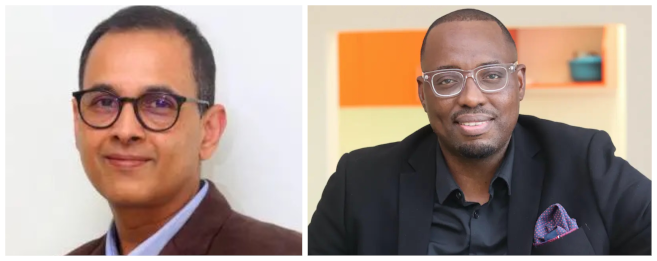
Deputy Vice-Chancellor and Head of the College, Professor Nhlanhla Mkhize, discussed the history of the university system, its origin as well as ability to reach a large target. He focused on transformation of the curriculum, using community-based centres of excellence as learning sites, such as taking students to visit traditional healer sites for more knowledge of African diversity in culture. Encouraging the use of the African language in research to produce their own work which originates in Africa.
Dean and Head of the School of Applied Human Sciences, Professor Matshepo Matoane then reflected on the subject of decolonising the South African university by responding to three protracted challenges where the issue of curriculum transformation and the roles played by the school are concerned. She referred to the study of (Hlatshawyo, 2023; Kumalo, 2020; Ndlovu-Gatsheni, 2021; Santos, 2007) that there is a need to recognise, critique and dismantle the deeply embedded colonial academy.
The aim is to re-emerge and resurrect marginalised, hidden, and silenced Global South epistemologies while confronting the deeply political and contested site of teaching and learning in universities.
‘Through this curriculum transformation, we look into the pedagogical innovation, decolonisation or Africanisation of the curriculum, fit-for-purpose assessment, entrepreneurship, as well as research-led teaching and learning,’ said Matoane.
Clinical Psychologist with a current emphasis in Community Psychology, Grills gave an overview of her research area, detailing many of her different project involvements. She said that projects vary based on the size of the community, from state to city, country etc, emphasising the commitment it takes to be able to maintain a good working relationship where community-based projects are concerned.
She added that amongst many other missions of the university, offering service of faith and the promotion of justice is one main goal the institution leans toward, for prospect attraction purposes ie, students as well as community members involved are required to be hands-on and commit themselves.
As a result, Director of Engagement Learning, Cooke spoke about the university’s relationship with their students with the aim to prepare the next generation and have a trusting relationship amongst people in the community of research aligned to transformational changes.
The full clip is available here.